The Future of Chronic Pain Management Starts with Whole-Person Care
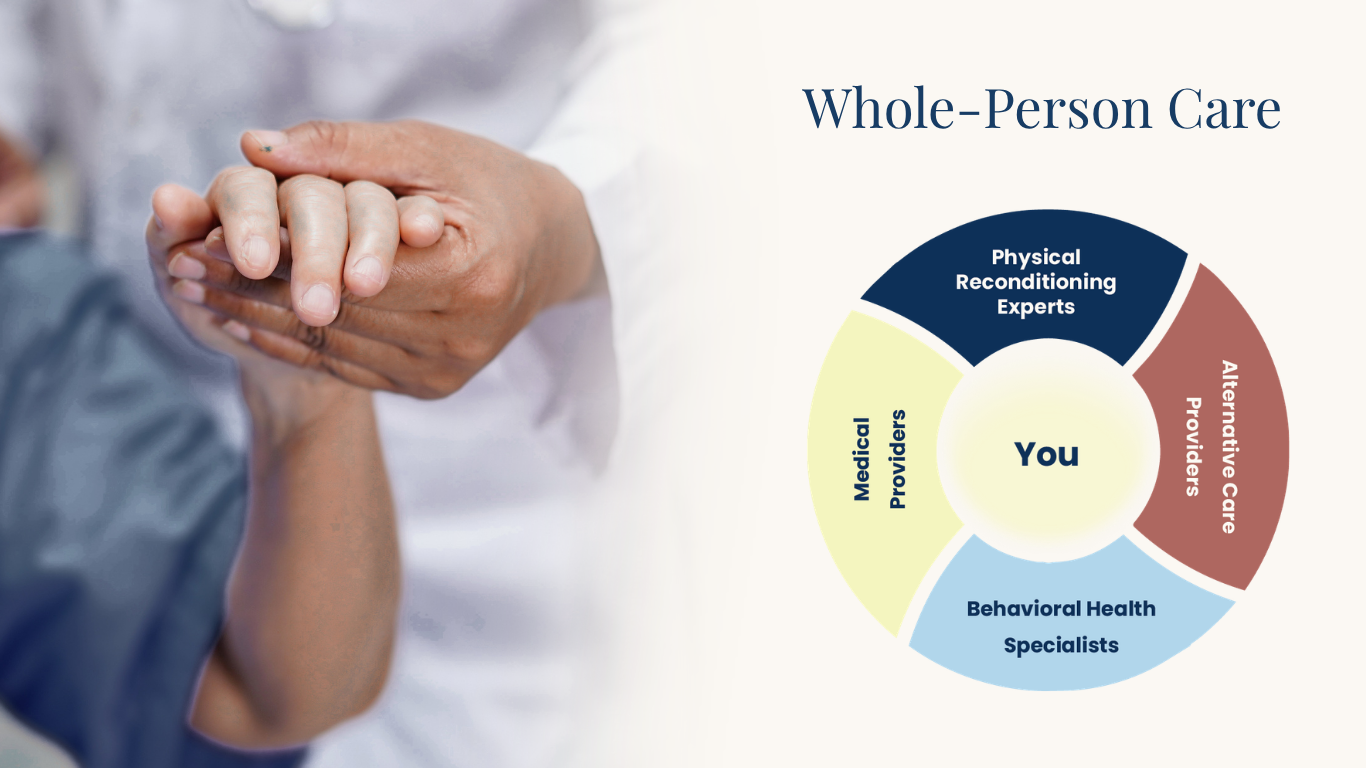
Traditional approaches to chronic pain management often treat pain with one symptom or one specialty at a time. Patients may find themselves navigating appointments with multiple providers, repeating their medical history, and trying to piece together treatment plans on their own. While each provider offers valuable expertise, fragmented care can make recovery more difficult.
At Lifekind Health, we believe there is a better way.
Our Unitized Transdisciplinary Care (UTC) model was built around a simple principle: treating the whole person, not just the condition. Chronic pain is rarely caused or resolved by a single factor. Physical health, mental well-being, movement, nutrition, and lifestyle all play a role in the process of healing, which is why meaningful, lasting results require a coordinated approach.
Rather than working independently, Lifekind Health's care team collaborates to create one personalized treatment plan tailored to each patient. Depending on individual needs, that team may include pain medical specialists, behavioral health professionals, physical rehabilitation experts, nutrition specialists, population health advocates, and care coordinators. Together, they communicate regularly, monitor progress, and adjust care as patients move through the healing journey.
This integrated approach reflects where healthcare is headed. Research continues to show that coordinated, multidisciplinary care can improve communication between providers, enhance patient engagement, and lead to better long-term outcomes for individuals living with chronic pain. The CDC’s clinical guidance specifically identifies a “multimodal and multidisciplinary approach to pain management” that addresses physical health, behavioral health, long-term services and supports, and overall well-being as critical to chronic pain care. (CDC, 2022)
Dr. Matthys Moreno-Derks (Psy.D.), a clinical psychologist from John. F. Kennedy University, explains, “Whole-person care is vital to address chronic pain, and behavioral health is a critical component.” He notes that chronic pain can affect “sleep cycle, self-esteem, stress levels, and mood,” with those effects potentially extending into employment, relationships, housing, food security, and a person’s sense of purpose.
Instead of asking patients to navigate the healthcare system alone, the UTC Model brings the healthcare system together around the patient.
For patients, that progress can take many forms. As Dr. Matthys describes it, “It looks like someone who gets out of bed with purpose, because they’ve learned how to manage the anxiety and depression that kept them there. Like walking 20 feet instead of 10.” He adds, “Chronic pain may be a fixture in someone’s life, but learning the tools to navigate it can significantly improve the quality of it.”
As healthcare evolves, so should the way we treat chronic pain. Through evidence-based medicine, collaborative care, and our innovative Unitized Transdisciplinary Care (UTC) model, Lifekind Health is redefining what comprehensive, patient-centered care can look like. Because healing isn’t just about managing pain - it’s about helping people reclaim their lives.
Dr. Matthys emphasizes that progress does not always look the same from one patient to another: “Chronic pain is one of the most common conditions in the United States, yet it’s also one of the most unique - no two people experience it, or recover from it, the same way. Progress isn’t linear. Some days it’s a big win, some days it’s just getting through. But it’s always meaningful, and it’s possible to build a life around it that still feels like yours.”
References
- Centers for Disease Control and Prevention. Chronic Pain Among Adults in the United States. https://www.cdc.gov/chronicpain
- National Institutes of Health. Helping to End Addiction Long-term (HEAL) Initiative. https://heal.nih.gov
- International Association for the Study of Pain. What Is Pain? https://www.iasp-pain.org
- Centers for Disease Control and Prevention. CDC Clinical Practice Guideline for Prescribing Opioids for Pain — United States, 2022. (CDC)